

Storage for Online Sellers in Ho Chi Minh City: Monthly Units from 4.5 m²
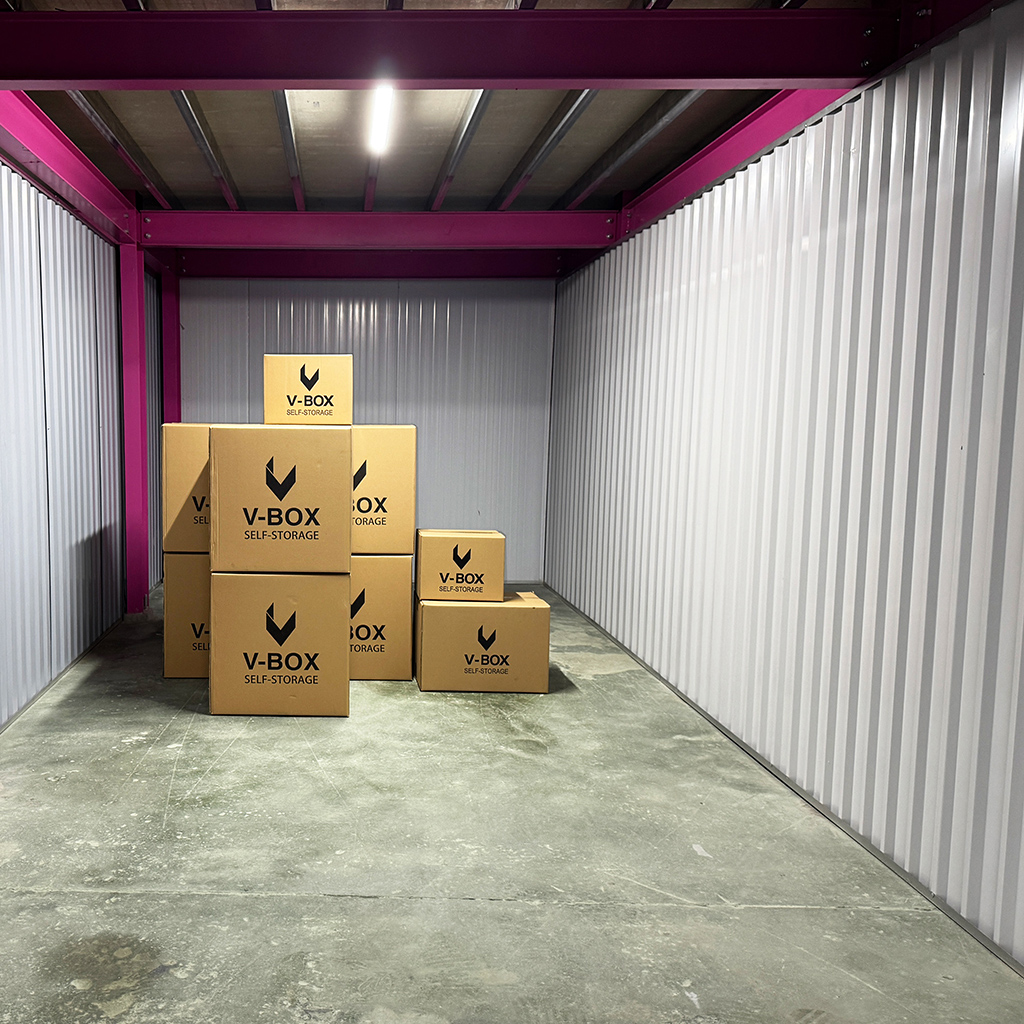
If your online shop has outgrown the spare room, V-Box Self Storage rents private, self-managed units from 4.5 m² at Phuoc Long and Cat Lai, its two facilities in Ho Chi Minh City. You lock the unit yourself, collect stock any day between 6:00 and 22:00 and pay month to month; prices start from 1,460,000 VND/month for the standard 4.5 m² unit, VAT included. What you rent is space only: no packing, no order handling, no delivery and no fulfillment.
This guide is for small brands run by foreigners or English-speaking teams that sell on Shopee, TikTok Shop, Lazada or their own website and still keep stock at home or in a cramped office.
Match the unit to your shop’s stage
Size your unit by the stock you hold at your busiest point, usually just before a big sale campaign, not by an average week. The table gives starting points from the sizes actually available; treat them as a reference and confirm with the team before you sign.
| Shop stage | What your stock looks like | Suggested starting point |
|---|---|---|
| Just launched | A few cartons you rarely need to touch | Shared storage billed by m³, minimum 1 m³ and 1 month |
| Selling steadily from home | One corner of a room, a shelf or two | Standard 4.5 m² (both facilities) or 4.95 m² (Phuoc Long) |
| Stock fills a spare bedroom | Several product lines, regular restocks | Phuoc Long 9 or 9.9 m²; Cat Lai 11.5 or 13.5 m² |
| Buying in larger batches | Restocks arrive as big lots | Phuoc Long 12.87, 14.4, 14.7 m²; Cat Lai 15.5, 17.5, 18 m² |
| Big seasonal peaks | You need aisles between the stacks | Cat Lai 21, 21.5, 22.5 or 30 m² |
| Business-scale stock | Hundreds of square meters of floor space | Cat Lai custom 100-300 m² or large 380, 565, 700 m² units |
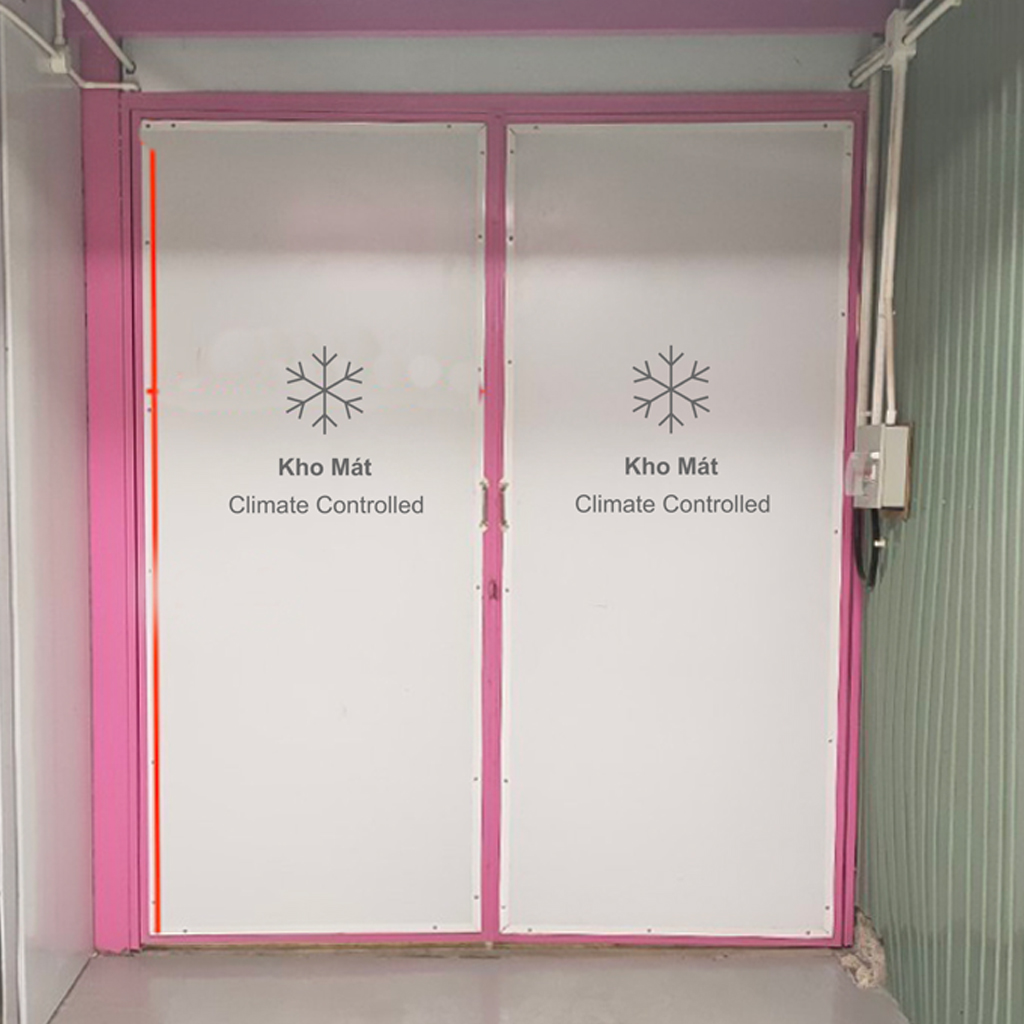
| Cosmetics, skincare, leather goods | Spoil or grow mold in heat and damp | Climate-controlled, below 25°C and below 55% humidity |
Climate-controlled units, shared storage and other sizes are quoted by size, unit type and rental term, so send your product list with your request. The custom and large units at Cat Lai in the business-scale row are standard units, quoted by size and term.
Round up rather than down: restocks arrive in batches, sale seasons pile stock up, and a unit that is too small means unstacking cartons to reach the back wall.
A shop that is only just starting, with a few cartons it rarely touches, can begin with shared storage billed by volume. If you expect to pull stock often, ask how goods go in and come out of shared storage before you choose it; the team explains the details when you sign the contract.
What V-Box does and does not do for sellers
You get a private unit inside a secured building; everything that happens to an order is your job. This is self storage, not a fulfillment center or a third-party logistics (3PL) provider.
What you get
- A private unit from 4.5 m² with its own combination lock, which you lock yourself. V-Box does not hold a master key.
- Access 6:00-22:00 every day at both facilities.
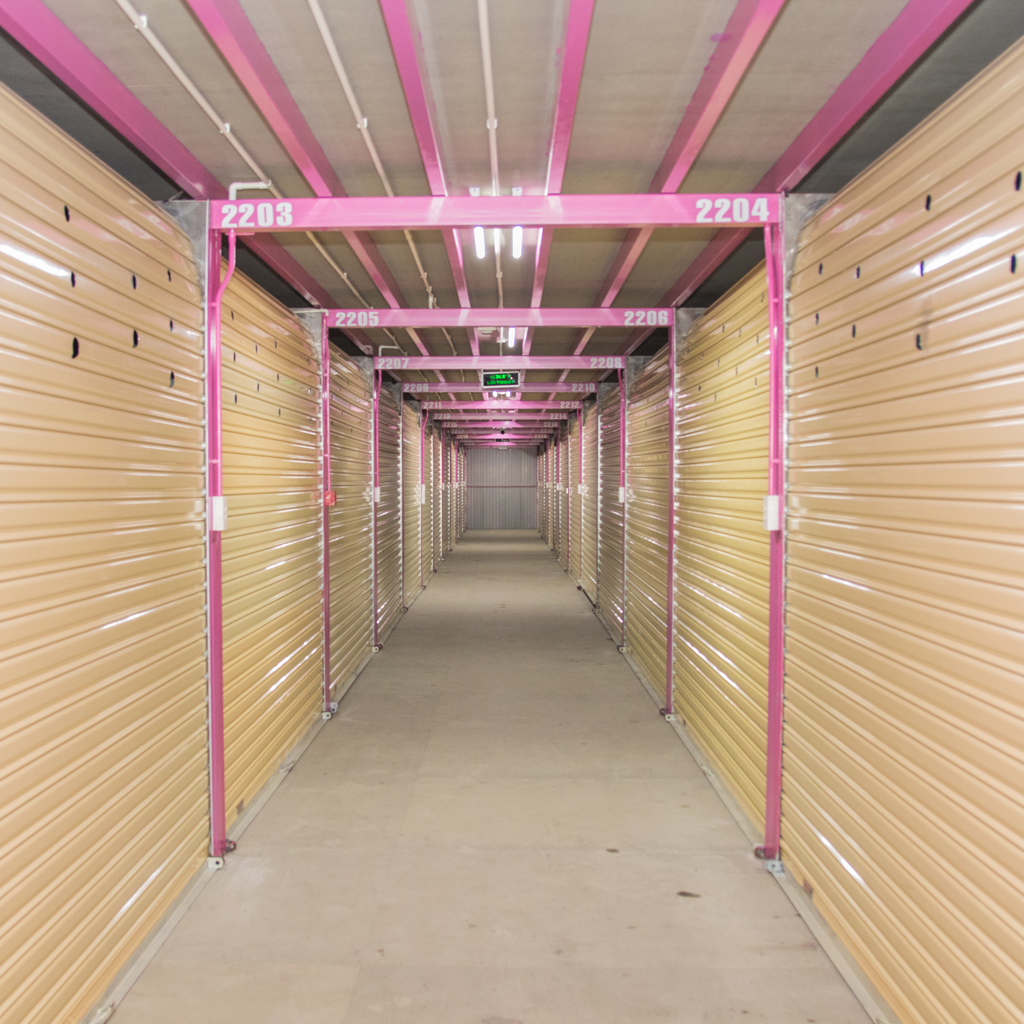
- 59 cameras covering 100% of corridors (32 at Phuoc Long, 27 at Cat Lai) and Ngày & Đêm professional security on site 24/7. When an incident occurs, CCTV footage can be retrieved within 15 days, as stated in the contract.
- Full VAT invoices for your rent.
- Monthly terms: no minimum term, billing of at least one month, a deposit of one month’s rent and no penalty for ending early.
- A referral to vetted moving partners, or help booking one, when you need a large batch of stock moved into the unit. Partners quote their own price.
- Staff who speak Vietnamese and English.
What stays with you
- Packing orders, and printing or sticking shipping labels.
- Order handling: taking orders and processing returns.
- Delivery to your customers, including handing parcels to couriers.
- Stock management: tracking goods in and out, counting stock and producing inventory reports.
If you want a company to receive, store, pick, pack and ship for you, you need a fulfillment provider instead.
A worked example: from spare bedroom to private unit
Moving stock into a unit changes where you keep it and where you pick it; the way you sell and pack orders stays much the same. The numbers below are hypothetical, for illustration only.
Suppose you sell skincare on Shopee and TikTok Shop, shipping around 30-50 orders a day from two steel shelving units in a spare bedroom. Say a few sale campaigns push that to 80-100 orders a day. New stock no longer fits, and every evening starts with shifting cartons to clear a path.
Suppose you then take a 9 m² or 9.9 m² climate-controlled unit at Phuoc Long, leaving room for sale-season stock and keeping the skincare below 25°C. You take new batches straight to the unit instead of your flat. Each morning, or every few days, you collect enough stock for the next round of orders and bring it back to the table where you always pack.
Say that a few months later the shop reaches about 150 orders a day. You could then add a standard unit at Cat Lai, such as 15.5 m² or 18 m², for sturdier product lines, while the skincare stays climate-controlled. With monthly billing and no penalty for ending early, adding or giving up a unit around peak seasons stays simple.
When climate-controlled storage matters for seller stock
Choose climate control when heat or humidity can damage what you sell: cosmetics, electronics, and printed packaging and labels are the usual cases. These units stay below 25°C and below 55% humidity, while standard units have no air conditioning.
- Cosmetics and skincare: heat and damp can affect textures, scents and outer packaging.
- Electronics and accessories: moisture is a risk for small devices, cables and the retail boxes they ship in.
- Printed packaging, labels and inserts: paper and card absorb moisture, so boxes soften and labels may not stick cleanly.
Ho Chi Minh City’s rainy season is very humid. Durable goods such as plastic homeware or metal accessories are fine in standard units without air conditioning, ideally in sealed cartons with silica gel packs. Climate-controlled sizes are 4.5, 4.95, 9 and 9.9 m² at Phuoc Long, and 4.5 and 6.5 m² at Cat Lai; read how the climate-controlled units work before you decide. They are not cold storage, so anything that must stay chilled needs a specialist cold store.
Keeping a small unit organized
A small unit with a clear layout is quicker to work from than a bigger unit packed at random.
Keep fast sellers near the door and slow movers at the back, and use your monthly marketplace sales report to decide what should change places. Write the SKU on the outside of every carton and turn the labels toward the aisle. If you plan to put shelving in the unit, ask the team first what is allowed; steel shelving generally holds heavy cartons better than plastic, which tends to bow.
Your stock is your working capital, so think about insurance as well. V-Box holds property insurance for the facility as required, with a general limit set in the contract. Sellers holding valuable stock are encouraged to take out their own goods insurance, with paperwork help from the team and MSIG as the partner insurer. Keep a simple stock-in, stock-out log too, because tracking inventory sits on your side.
Home, a warehouse lease or self storage
Self storage sits between the two options most small shops already know. Stock kept at home costs no rent but eats into living space and is hard to keep dry in the rainy season. A warehouse lease gives you room, but usually far more floor space than a shop with a few dozen cartons needs. A self storage unit gives you just enough space from 4.5 m², monthly billing, a unit you lock yourself and a VAT invoice; packing and delivery remain yours to do.
When V-Box is not the right fit
It is the wrong choice for shops that need someone else to run the warehouse side, or for stock that needs conditions a self storage unit cannot offer.
- A few days around a sale: billing is at least one month, so short bursts of a few days are not a good match.
- Packing, order handling, delivery or stock management done for you: look for a fulfillment or 3PL provider instead.
- Cold storage at 1-2°C, or fresh food: climate-controlled units stay below 25°C and below 55% humidity; they are not cold storage.
- Equipment that needs power inside the unit, such as a freezer or a machine that runs all the time.
How to get started
Getting set up takes three steps: request a quote, sign with a deposit of one month’s rent, then move your stock in. If you would like to see the facility first, you are welcome to arrange a visit.
List your product types, a rough carton count and your preferred facility when you send your product list for a quote. If you would rather talk it through first, leave the team a message; the office is open Monday to Friday, 8:30-17:30.
The first V-Box facility, Phuoc Long, is at Alley 2 Thuy Loi, Phuoc Long Ward, Ho Chi Minh City, and has been open to customers since 27 February 2022. The second, Cat Lai, opened on 15 September 2025 at 934D3 Road D, Cat Lai Ward, Ho Chi Minh City. Together they have 353 storage units in operation (262 at Phuoc Long, 91 at Cat Lai).
When you want to stop, give notice before the payment date of the next period. After you clear and hand back the unit, the deposit is refunded on the 10th of the month or the last working day of the month, whichever comes first.
Call our central hotline: 0862262848, or message us on Zalo or WhatsApp at 0862264669.
Frequently asked questions
What is the difference between self storage and a fulfillment center?
With self storage you rent a private space and do the work yourself: bringing stock in, picking it, packing and shipping orders. A fulfillment center receives your stock, stores it, picks and packs each order and hands it to couriers for you. V-Box Self Storage offers only the first: private units from 4.5 m² in Ho Chi Minh City, with no packing, order handling, delivery or fulfillment.
Who holds the key to my stock unit?
V-Box does not. Each unit has its own combination lock, which you lock yourself, and V-Box holds no master key. Around the units, 59 cameras cover 100% of corridors (32 at Phuoc Long, 27 at Cat Lai), and Ngày & Đêm professional security is on site 24/7.
How do I estimate how much space my stock needs?
Count your cartons at the point when you hold the most stock, usually just before a big sale, and add room for an aisle so you can reach the back. A few cartons can start in shared storage (billed by volume, minimum 1 m³ and 1 month), while stock that fills a corner of a room suits a standard 4.5 m² unit. If you are unsure, send your product list and carton count with your quote request and ask for a suggested size.
Can I store products that need refrigeration?
No. Climate-controlled units at V-Box stay below 25°C and below 55% humidity, which suits cosmetics, electronics and printed packaging, but they are not cold storage. Goods that need 1-2°C, fresh food, and equipment that must run on power inside the unit, such as a freezer, are not a fit.
How do I work storage costs into my cost per order?
Divide the month’s storage rent by the number of orders you shipped that month. Say you ship 2,000 orders in a month: the rent divided by 2,000 is your storage cost per order, which you can set beside marketplace fees, shipping, ads and each product’s margin. V-Box issues full VAT invoices for the rent; ask your accountant how to record them as a business expense.